10 Days in Croatia Itinerary: Exploring the Dalmatian Coast

When I published my 7 days in Croatia itinerary, a lot of people asked me why I didn’t include any of the islands and my answer was that I wanted to give you a realistic plan and not exhaust you by jumping from a place to place. But, if you have 10 days in Croatia, then you can easily add an island to your itinerary.
As a Croatian who has been travelling around the country her whole life, I recommend visiting only one island because once you’re there, you’d immediately realise that one day for an island is not enough. And if this is your first trip to Croatia, then it makes sense to focus on the Dalmatian coast first because it has the most beautiful beaches and towns.
Therefore, in this 10 days Croatia itinerary you will start your journey in Dubrovnik, go to Split, make a few day trips from there and lastly take a ferry to the island of Hvar. This itinerary is made for 10 full days in Croatia and doesn’t include travel days to/from Croatia.
You will change your hotels 3 times only and this itinerary will be a mix of historical places and nature.

Croatia Travel Plan
If you’re looking for a custom Croatia travel plan, find out more about my personalised itinerary service.
Heads up! Some links in this blog are affiliates. If you click and buy, I may earn a small commission at no extra cost to you. Rest assured, I only recommend stuff I’ve tested or trust. You can read more about our affiliate disclaimer here.
Short on time? Here are my top recommendations:
HOTELS:
ACTIVITIES:
⭐️ Join my Croatia Travel Tips FB Group to ask questions, get advice and engage with our community.
Itinerary Overview
Before we go into details on what to do each day, here’s a quick overview of my recommended 10 days in Croatia itinerary:
|
DAY 1 |
Dubrovnik |
|
DAY2 |
Dubrovnik |
|
DAY 3 |
Split |
|
DAY 4 |
Split |
|
DAY 5 |
Salona & Klis |
|
DAY 6 |
Krka National Park |
|
DAY 7 |
Trogir |
|
DAY 8 |
Hvar |
|
DAY 9 |
Hvar |
|
DAY 10 |
Hvar |
Where to Stay in Croatia for 10-Day Croatia Itinerary
For this exact itinerary, you will have 3 main bases: Dubrovnik, Split and Hvar, so despite doing day trips on certain days, you won’t be moving around as much, which I believe is better and more relaxed rather than packing things up every or every second day.
Here are my top picks for each place:
- Studio Apartment Lumia Dubrovnik – cosy apartment in the Old Town; great location & have personally loved it
- Hotel Ambasador Split – iconic 5 star hotel in Split city centre
- Tilla’s House Hvar – cosy apartment with beautiful views & have personally loved it
📖 Read my 10 Beautiful Boutique Hotels in Croatia Worth Booking blog post.
Day 1: Dubrovnik
There is no better place to start your travel journey in Croatia than Dubrovnik, especially if this is your first time visiting Croatia.
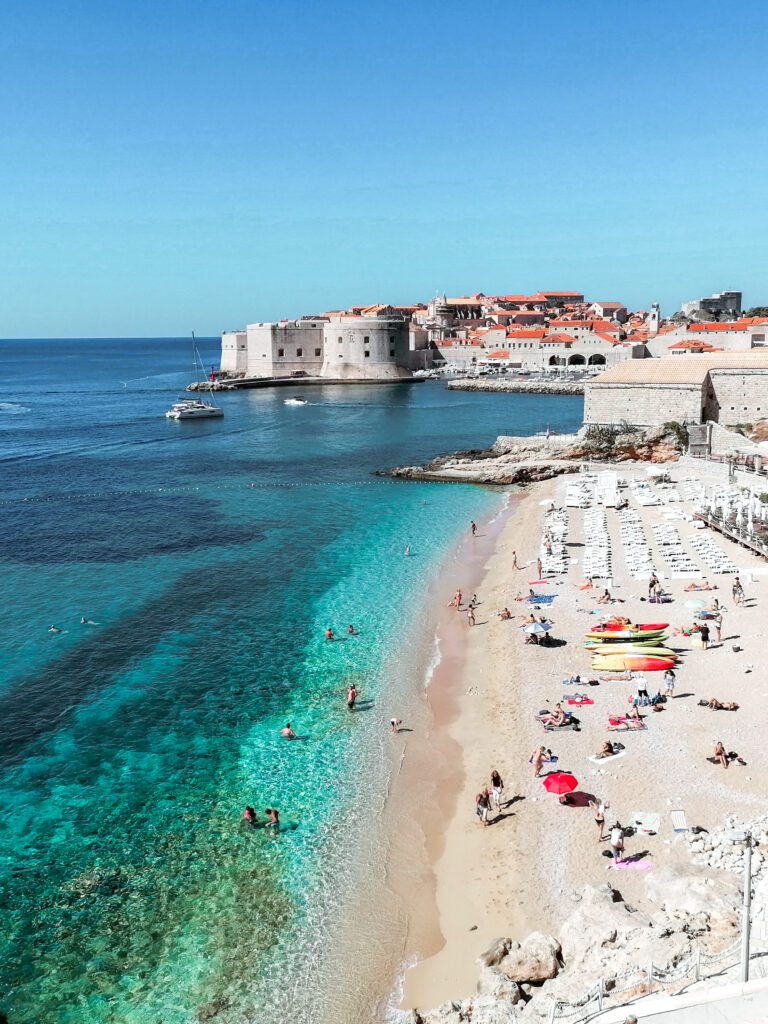
On your first day in Croatia, and in Dubrovnik, I recommend exploring the Old Town and afterwards relaxing at its most famous Banje Beach.
Dubrovnik Old Town
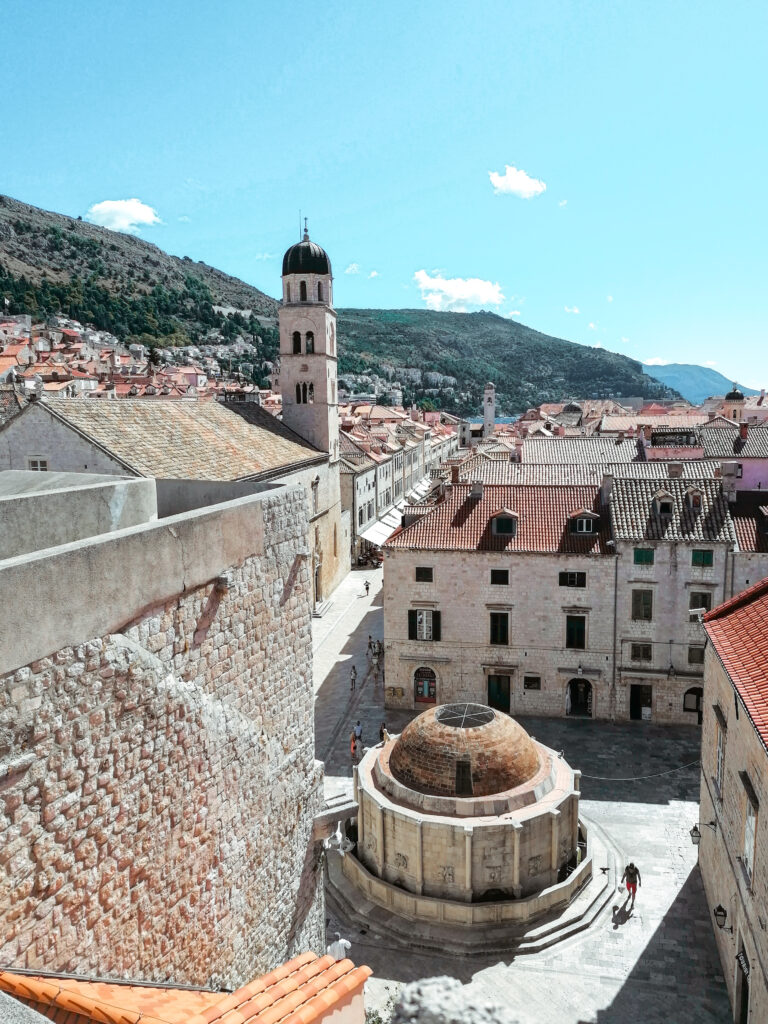
The Old Town of Dubrovnik was inscribed as the UNESCO World Heritage Site. As soon as you enter through Pile or Ploce Gate, you’d feel like you went hundreds of years back in time!
Here are some of my favourite sites you should check in the Old Town of Dubrovnik:
- Stradun Street
- Large Onofrio’s Fountain
- Rector’s Palace
- Dominican Monastery
- St Blaise’s Church
- Dubrovnik Cathedral
- Jesuit Stairs
- Church of St Ignatius
- Jesuit College
✅ I recommend this Dubrovnik Old Town Walking Tour if you’d love to learn about Dubrovnik from a local guide.
📖 Read my 7 Best Places to Visit in Croatia for First Timers blog post.
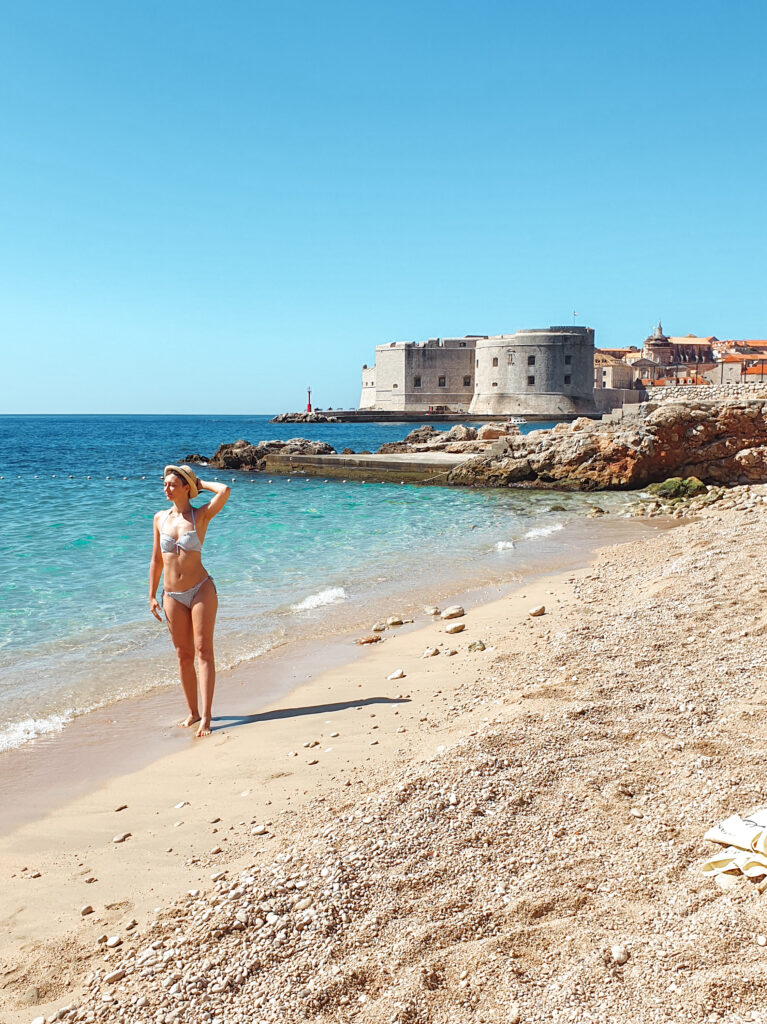
Banje Beach
Banje Beach is one of my favourite beaches in Dubrovnik, for 3 reasons: it’s closest to the Old Town, so the views are inevitable and it’s a mix of pebble and sand with nice clear turquoise water.
There’s also a beach bar at the beach where you can rent sun loungers and umbrellas for the day.
A cocktail by the beach is a perfect way to end your first day in Croatia after a few hours of sightseeing.
Day 2: Dubrovnik
The second day in Dubrovnik is all about the good views. You will explore the City Walls, Fort Lovrijenac and lastly go to Mount Srd for panoramic views of Dubrovnik Old Town.
Dubrovnik City Walls
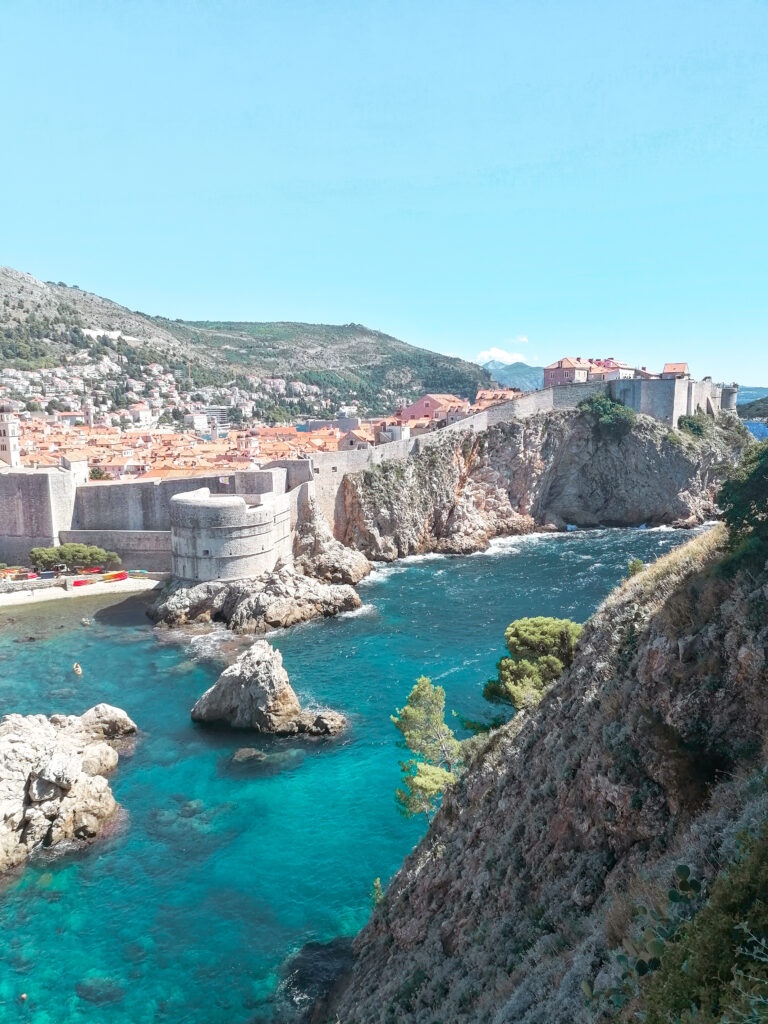
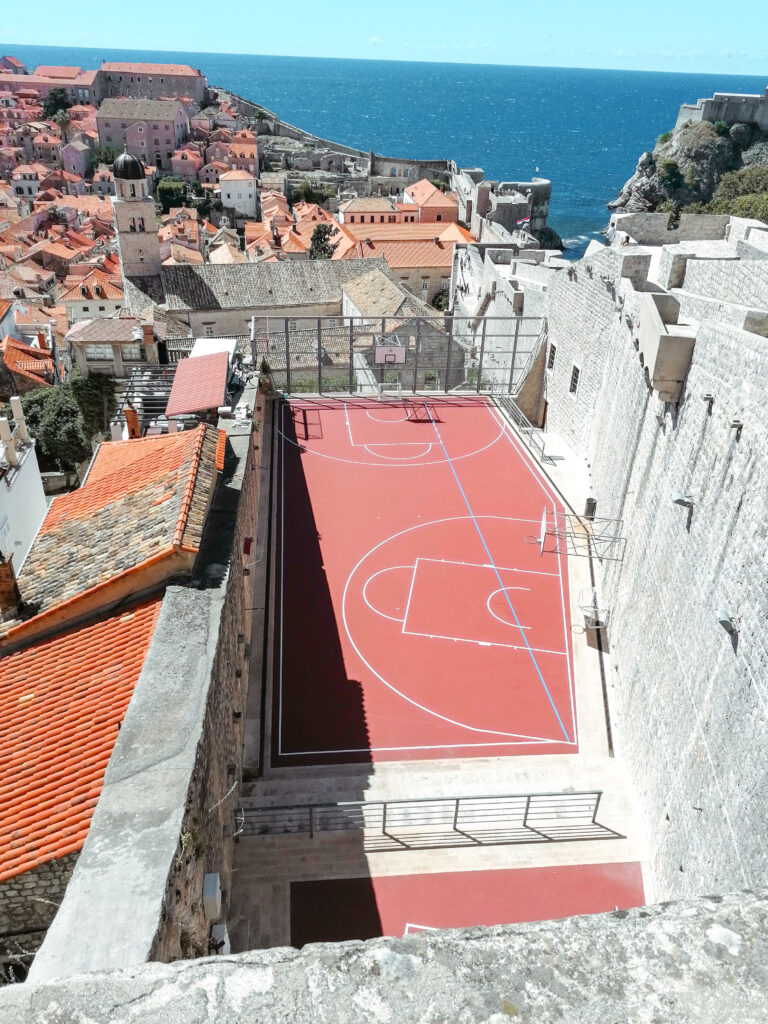
If there is one attraction in Dubrovnik that you have to visit and is worth every penny, it’s the City Walls!
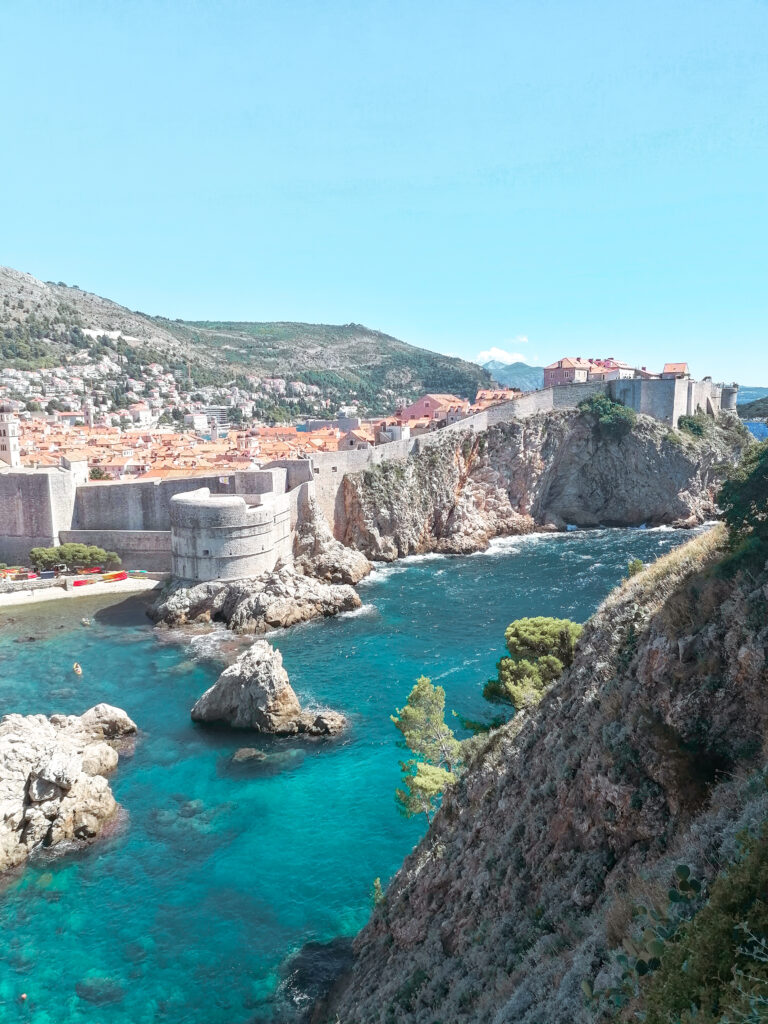
The medieval walls of Dubrovnik were built in the 13th century and are one of the best preserved in the world. The walls run uninterruptedly for almost 2 km (6360 ft) and are encircling most of the Old Town, so expect for the walk to take approximately 2 hours.
Today, the Walls of Dubrovnik are one of the most popular tourist attractions in Croatia, especially after Dubrovnik was featured as the Kings Landing in Game of Thrones.
You can get the tickets at one of the 3 entrances (next to Pile Gate, Ploce Gate or St. John Fortress) or online.
✅ Additionally, you can join this best rated early morning or sunset guided tour and explore the walls with a local guide.
Fort Lovrijenac
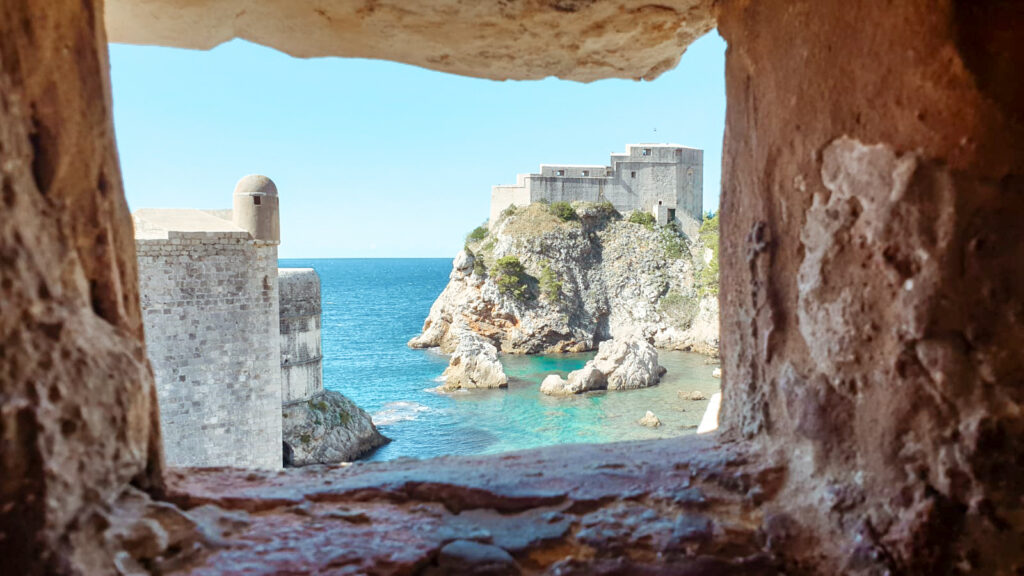
After you’re done with the City walls, head to Fort Lovrijenac or the St. Lawrence Fortress, just make sure to keep your City Walls ticket with you because it covers the fort too! Otherwise you’ll need to pay extra for the fort if you lose or throw away the ticket.
The fortress is a symbol of Dubrovnik’s survival and freedom because it defended the City from the sea and covered the western Pile Gate. Needless to say that Fort Lovrijenac was also used in Game of Thrones as the Red Keep.
✅ If you’re like me a fan of GOT, I recommend joining this Dubrovnik Game of Thrones Tour.
Mount Srd
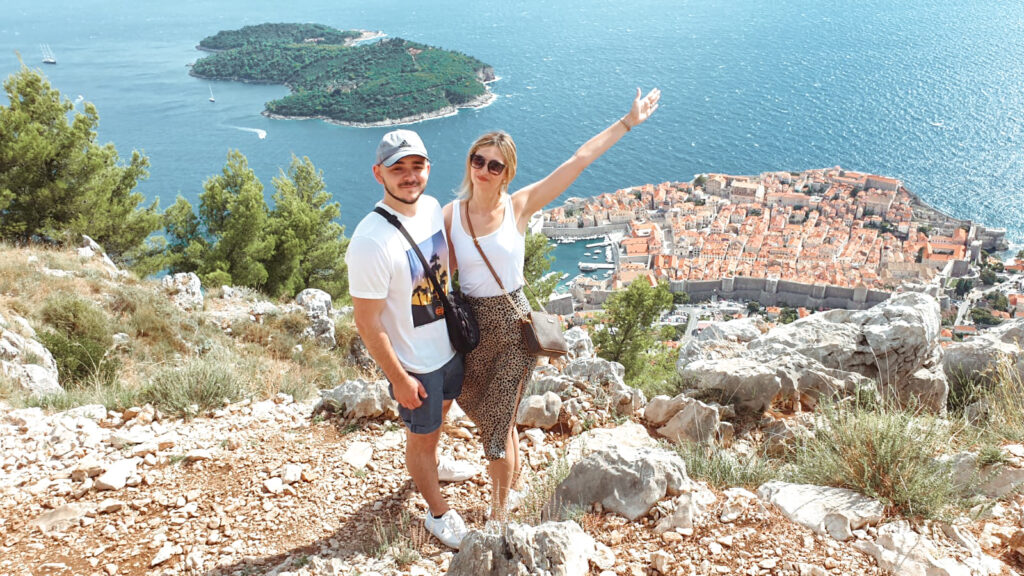
Mount Srd is the best viewing point in Dubrovnik because it offers panoramic views of the whole town and Lokrum Island.
The summit of Srd is at 412 m (1,352 ft). At its top you will find Fort Imperial, a defensive structure built by the French in 1810 during the Napoleonic Wars.
In the 1990s during the Croatian War for Independence one of the fiercest battles happened on the mountain during the Siege of Dubrovnik (now commemorated in a museum at Fort Imperial).
Fortunately, today this is a place for soaking up the beautiful views and breathing the fresh air.
There are 4 ways to get to the top of Mount Srd: hiking (what we did), taking a cable car, joining a guided tour or by renting a car (you can also get an Uber).
At the top of Mount Srd, you will also find Panorama Restaurant with delicious food and amazing views. I recommend having at least a cup of coffee there.
Day 3: Split
The next 2 days of this 10 days in Croatia itinerary you will move to Split, which will also be your base until your trip ends.
Old Town
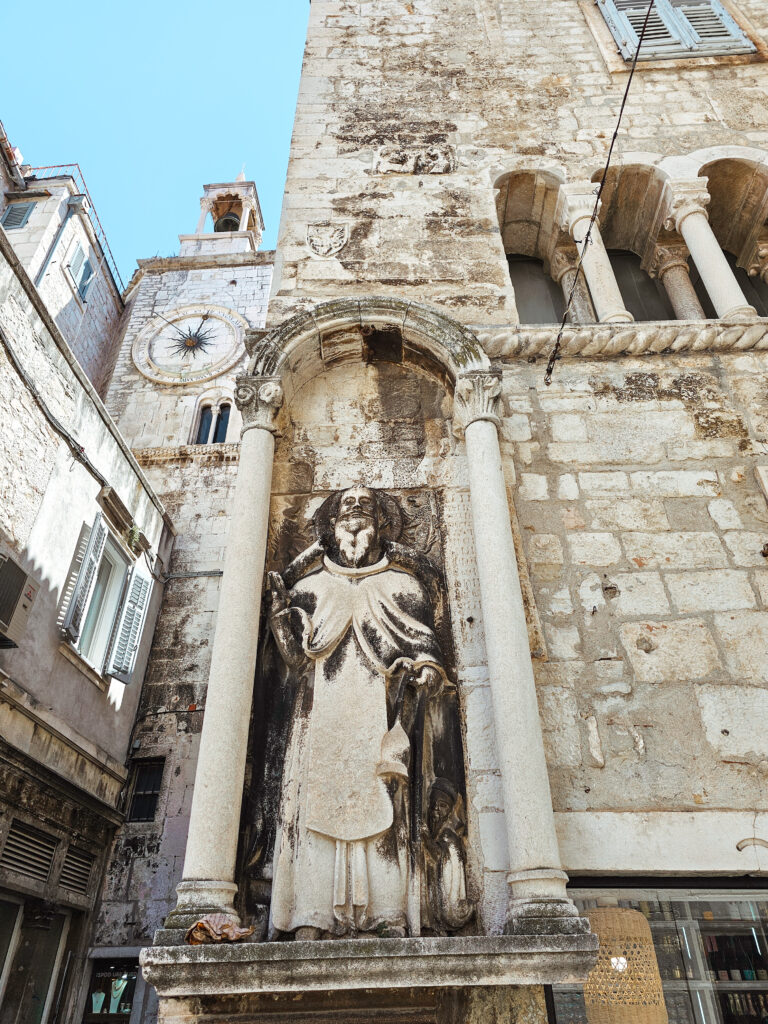
I love Split’s Old Town a lot! Pretty much everywhere you look, there’s a nice building or some hidden ruin, like the old French post box.
The Old Town is a mix of medieval and Roman architecture, which makes it very unique. You can easily spend a few hours just roaming around the Old Town.
Here are some of my favourite sites you should check in the Old Town of Split:
- Saint Domnius’ Cathedral
- Bell Tower of the Cathedral (climb for the views)
- Cyprian’s Palace
- People’s Square
- Old Town Hall
- Old French Post Box
- Golden Gate
✅ I recommend taking this Old Town and Diocletian Palace Walking Tour to learn more from a local guide.
📖 Read my Dreaming of Croatia: 15 Best Places to Visit blog post.
Diocletian’s Palace
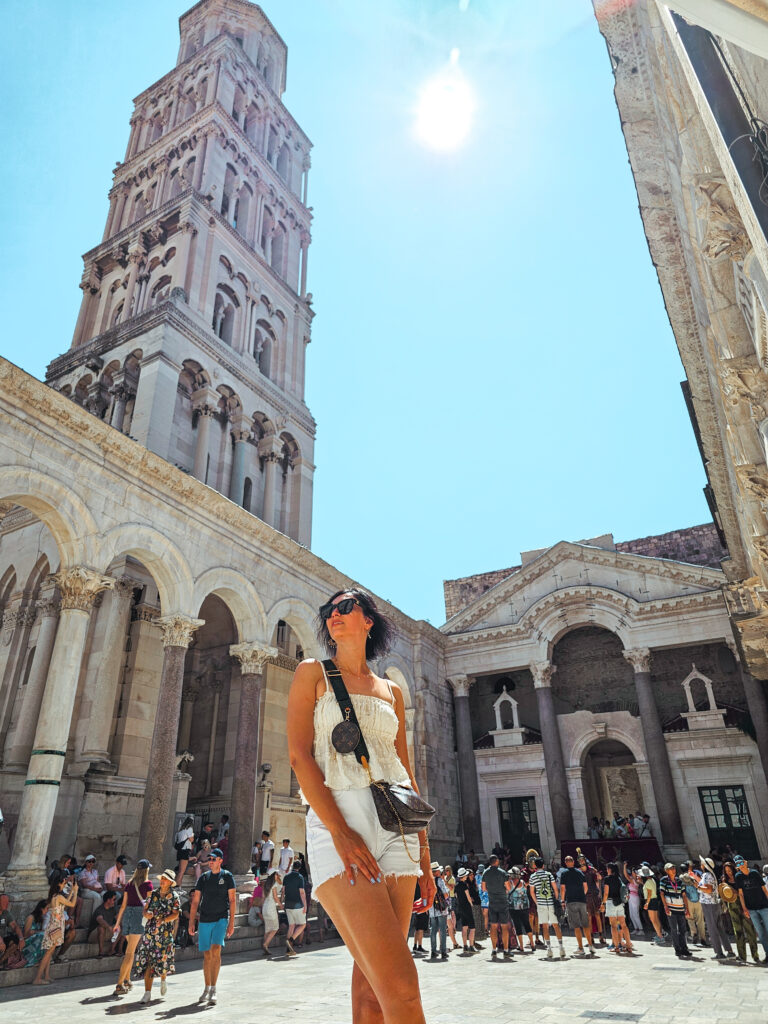
If you heard of Split, it’s probably because you heard of Diocletian’s Palace.
The palace was built at the end of 3rd century AD by the Emperor Diocletian who came to Split (ancient Salona) to retire and he built himself a beautiful palace by the sea.
After the fall of the Roman Empire, the palace was inhabited by refugees and common people who eventually built their homes and businesses inside the palace complex.
With the further development of the city of Split, the palace got incorporated into the Old Town walls, so sadly it no longer exists as a standalone site.
Which is why walking around the Diocletian’s Palace is free because it’s part of the Old Town. There’s a small section of it that you can pay to visit, but it’s mainly the underground basements, which in my opinion could be skipped.
Because of its historical and cultural heritage Diocletian’s Palace was inscribed under the UNESCO World Heritage Site in 1979.
📖 Read my 7 Best Food Tours in Split to Experience Croatian Food blog post.
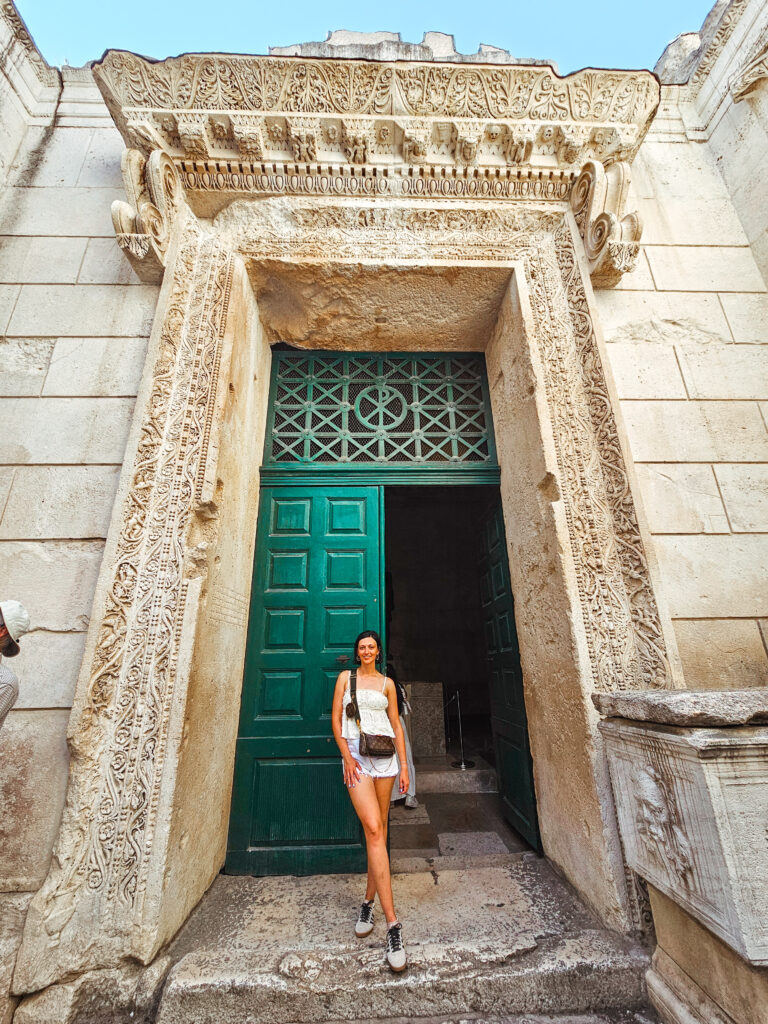
Temple of Jupiter
Even though the Temple of Jupiter is part of the Old Town, I mentioned it separately because it’s a really cool site that deserves a bit of an intro rather than just being a bullet point.
The Temple of Jupiter was constructed between 295 and 305 AD as a part of Diocletian’s Palace and was dedicated to the supreme Roman god Jupiter.
I was surprised how well it was preserved, so it’s definitely a must visit in Split!
Split Riva
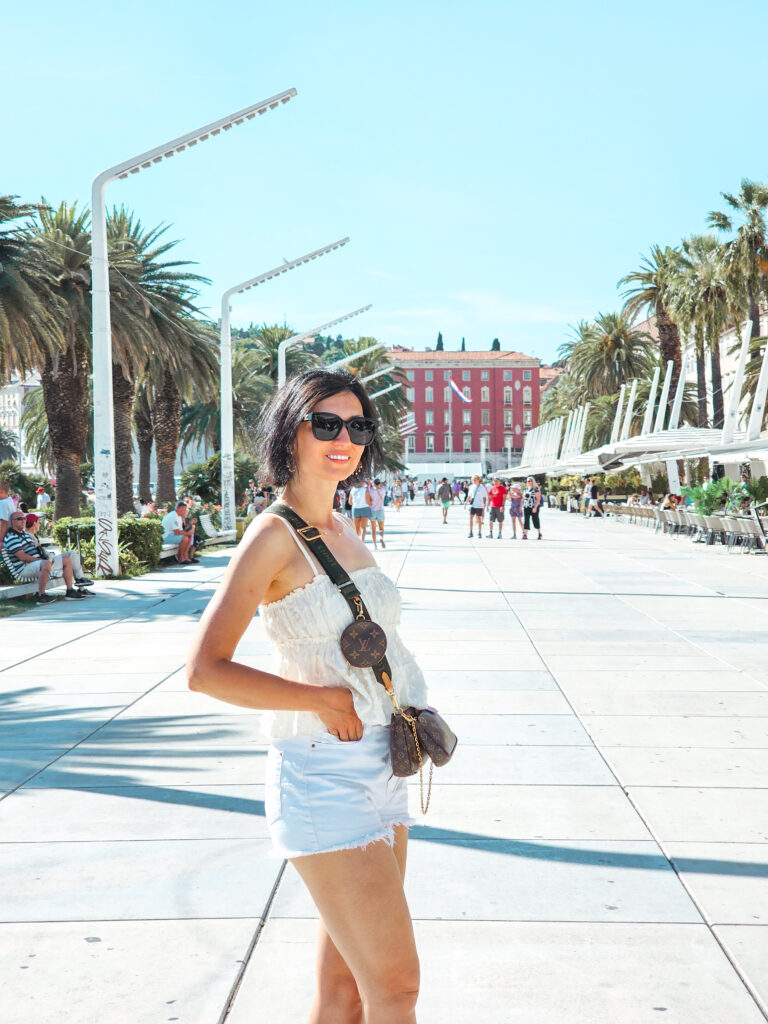
Split riva or promenade is a great place to relax after all these sightseeing.
It’s full of cafes and restaurants and while the prices are more expensive than in other areas, I recommend at least having a cup of coffee by the sea.
Day 4: Split
Your second day in Split will be more active and nature-focused.
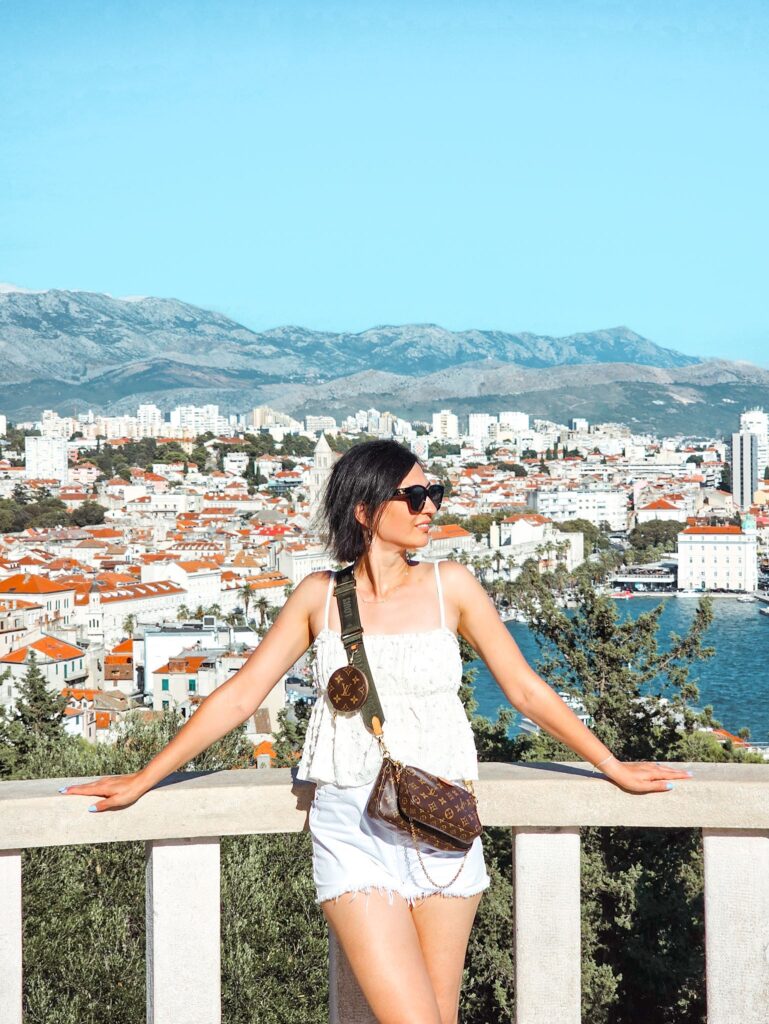
Marjan Park
I recommend going to Marjan Park first, especially if you’re there in summer to escape the heat.
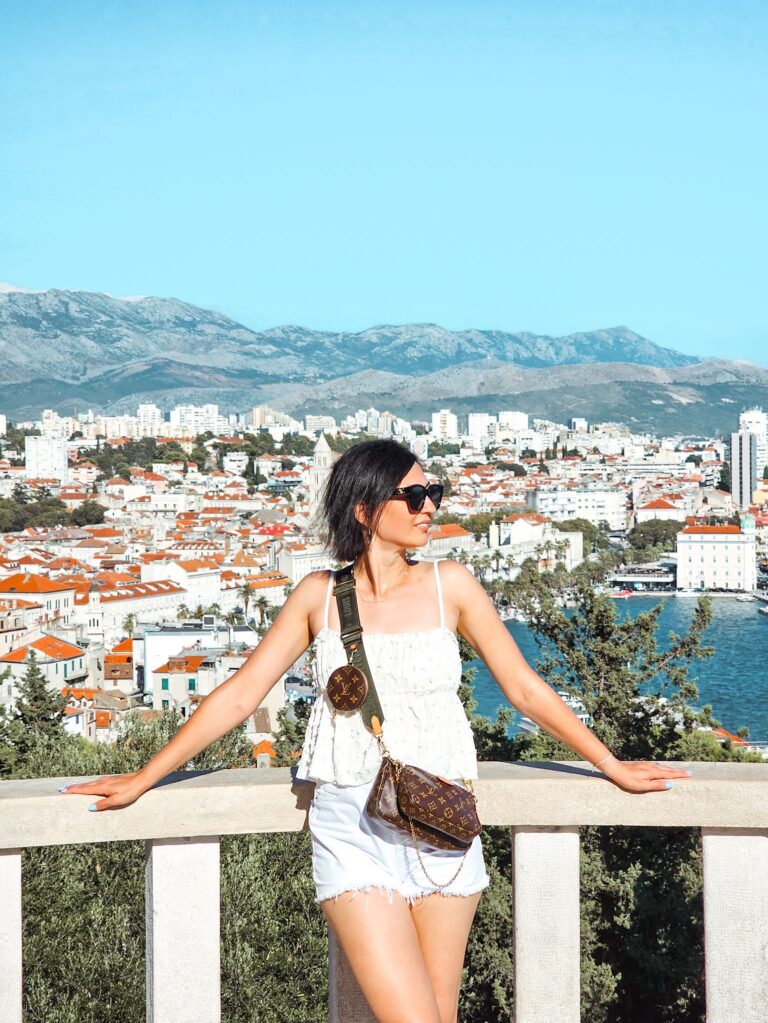
Marjan Park is a nice park and hiking area with great views of Split. There’s also a cafe and restaurant in the park where you can refresh or eat something afterwards.
You don’t need to hike all the way if you don’t feel like it, the restaurant and the viewpoint below are after an about 20 min hike of moderate difficulty.
Beach Time
After visiting Marjan Park, I definitely recommend going to the beach.
If you’re already at the park, then you can go all the way down to Kasjuni Beach, which is an hour walk from the park.
Another popular beach which is closer to the city centre is Bacvice.
Day 5: Salona & Klis
Now that you explored Split, it is time to do day trips. As a Historian, I have to recommend and start with Salona and Klis.
✅ To visit both places, you need to rent a car or take a guided tour.
P. S. Both places are out in the open, so bring water, a hat and sunscreen!
Salona
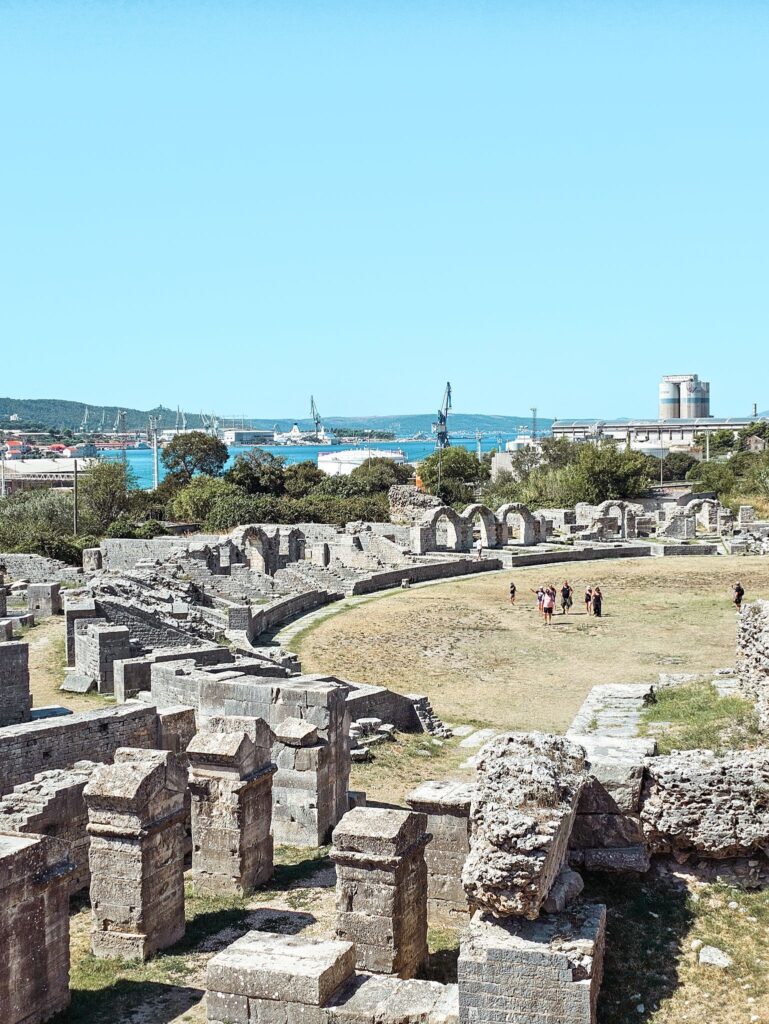
Salona was the capital of the Roman province of Dalmatia, located near modern-day Split. It was also one of the largest cities of the late Roman Empire.
Salona was founded in the 3rd century BC and was mostly destroyed during the invasions of the Avars and Slavs in the 7th century AD.
As a Croatian, I was left in awe how much there is to see at Salona, although most of it is in ruins. And was also sad to see that not many people visit, which is such a shame!
If you love history and ancient places, you will love Salona, especially as it’s crowds-free.
📖 Read my 20 Insider Things to Know before Travelling to Croatia blog post.
Klis
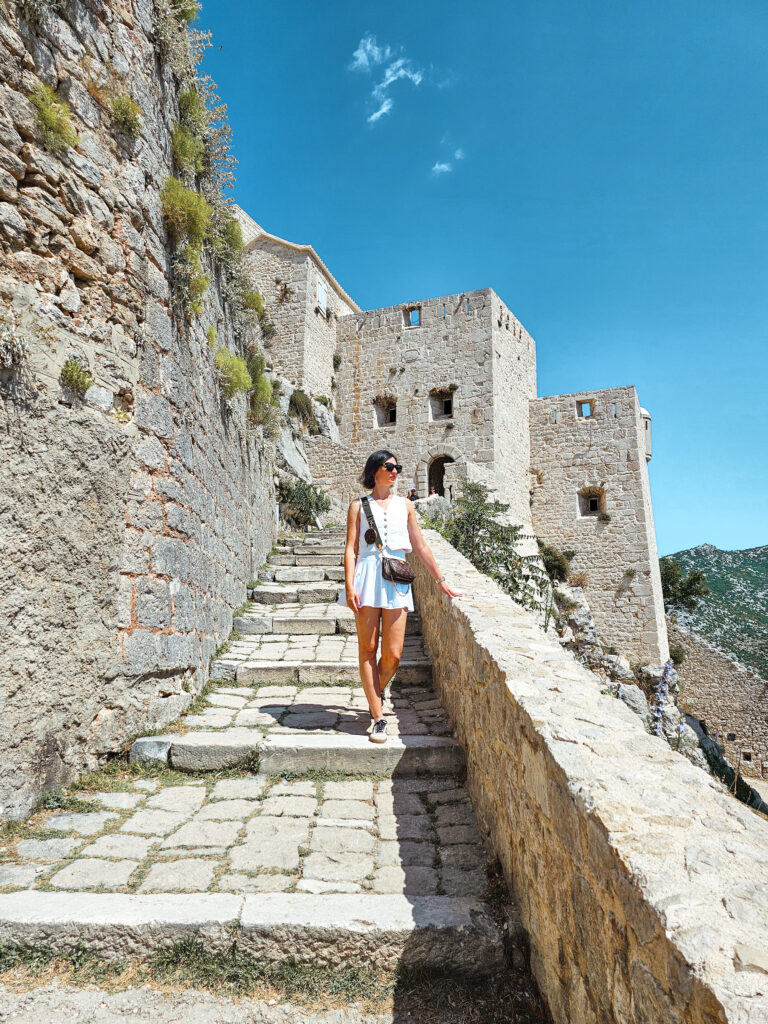
But even more than Salona, I was impressed with Klis Fortress!
I’m not exaggerating when I say that it goes on par with Windsor Palace and similar sites. I’m not at all surprised that Klis was used as a filming location in Game of Thrones.
Duke Mislav of the Duchy of Croatia made Klis Fortress the seat of his throne in the middle of the 9th century. Since then the fortress served as the seat of many Croatia’s rulers, including Croatia’s first king Tomislav.
You can spend 1-2h exploring the fortress and enjoying the views of the Split area.
📖 Read my A Brief History of Croatia: From Prehistory to Present Day blog post.
Day 6: Krka National Park
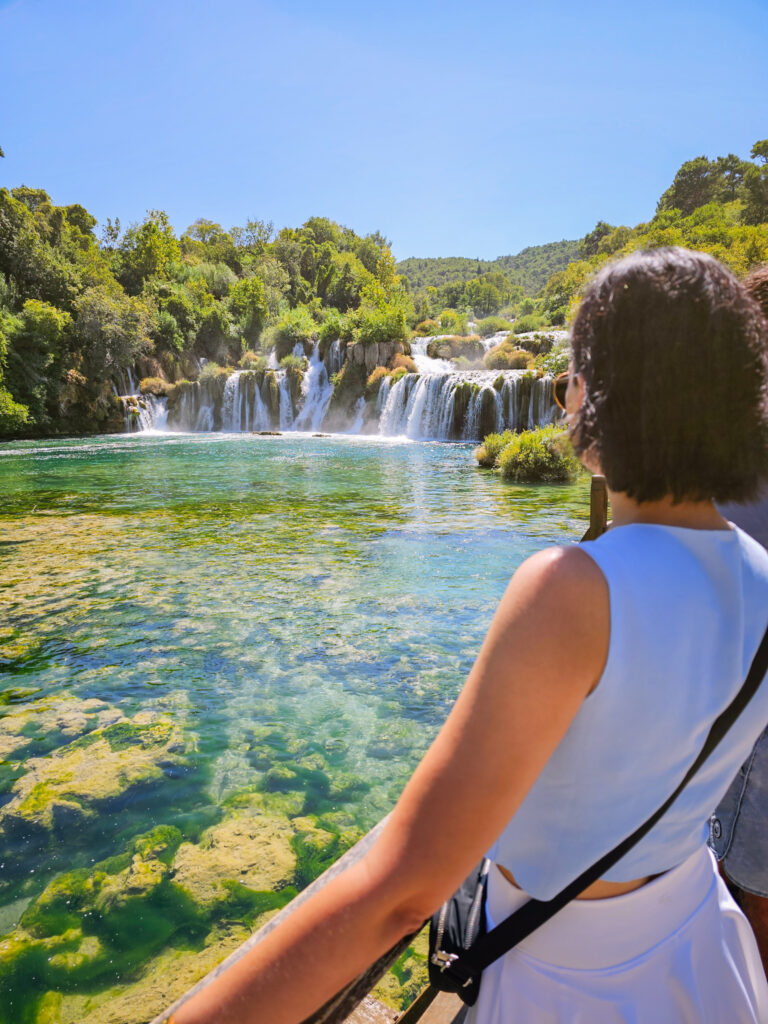
Another amazing day trip you can do from Split is Krka National Park.
While a lot of people visit Plitvice Lakes from Split, I personally think they are a bit further away and therefore you’ll spend a lot of time driving vs enjoying the lakes.
Krka National Park is about 1h drive from Split, so it’s much more accessible and logistically easier to reach than Plitvice. It also has beautiful waterfalls and nature, and if you’re there in summer, there’s also one beach where you are allowed to swim.
Overall, I think it’s a better choice if you’re in Split, that’s why I’m recommending Krka.
✅ To visit Krka National Park, you need to rent a car or take a guided tour.
Here are the best things and places to see in Krka:
- Skradinski Buk Waterfall
- Boat ride through Visovac Lake
- Visovac Monastery
- Roski Slap Waterfall
- Beach near Roski Slap
- Seosko Domacinstvo Kristijan for trying the local food
Day 7: Trogir
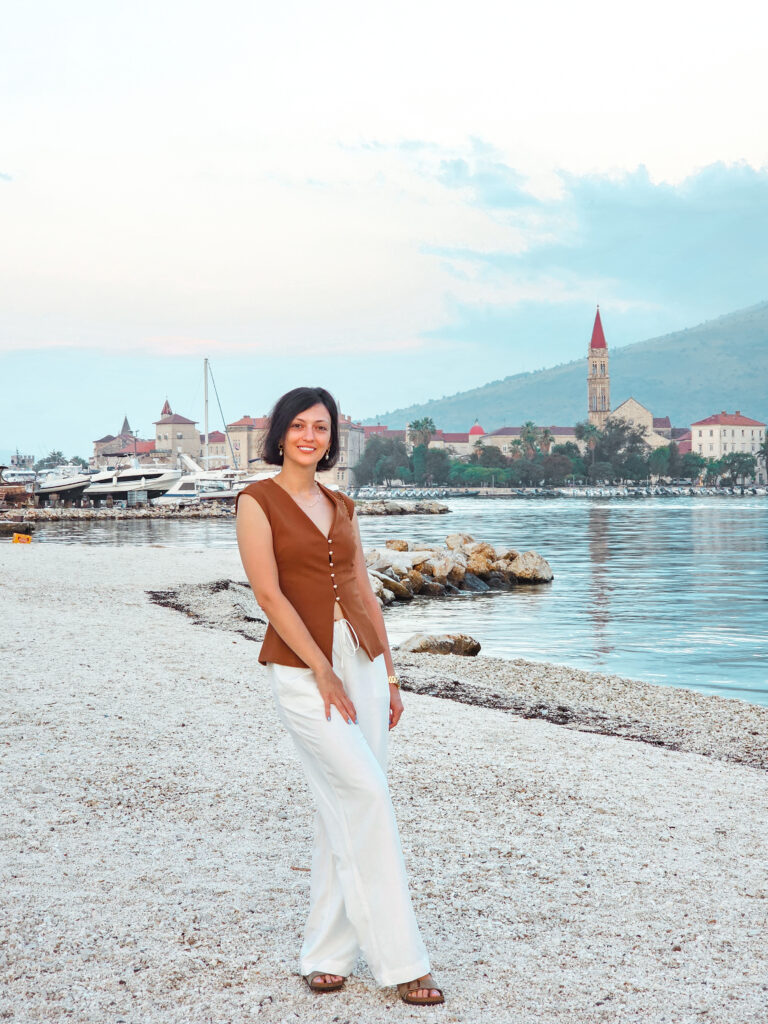
If there is one small town near Split you have to visit, it’s Trogir!
In many ways it resembles Split, but it’s more like a mini version of Split’s little sister. Because of its outstanding beauty and a remarkable example of urban continuity, Trogir was inscribed into the UNESCO World Heritage Site in 1997.
Here are some of my favourite sites you should check in the Historic City of Trogir:
- Main Square
- St Lawrence Cathedral (climb for the views)
- Cipiko Palace
- City Hall
- City Loggia
- Kamerlengo Castle
- Church of St Nicholas
- Church of St John the Baptist
- Church of St Peter
- Church and Monastery of St Dominic
- Green Market
- Promenade
Day 8: Hvar
Now is time to take a ferry from Split to Hvar. If you’re travelling by car, then you need to take the ferry to Hvar town, otherwise catamaran to Stari Grad is just as fine and it would ultimately depend where you want to base yourself in Hvar.
✅ Consider taking this Old Town Walking Tour with a Local Guide.
Hvar Town
Hvar Town is the most popular destination in Hvar, which also means it’s the most touristy place.
If you’re without a car, it’s a great place to base yourself because there are a lot of guided tours you can take from there to take you to Hvar’s beaches and bays that are mostly accessible by car only.
Here are some of my favourite sites you should check in Hvar Town:
- St Stephen Square
- Cathedral of St Stephen
- Arsenal Building
- Promenade
- Central Park Club

Spanish Fortress
The Spanish Fortress, also known as Fortica, is a fortress in Hvar Town that was built in the 13th century when Hvar was under the Venetian rule.
The fortress with its city walls formed a unique defence system, especially in the 16th century under the Ottoman invasion of Croatia.
You can either drive to the fortress or take a short hike from Hvar Town.
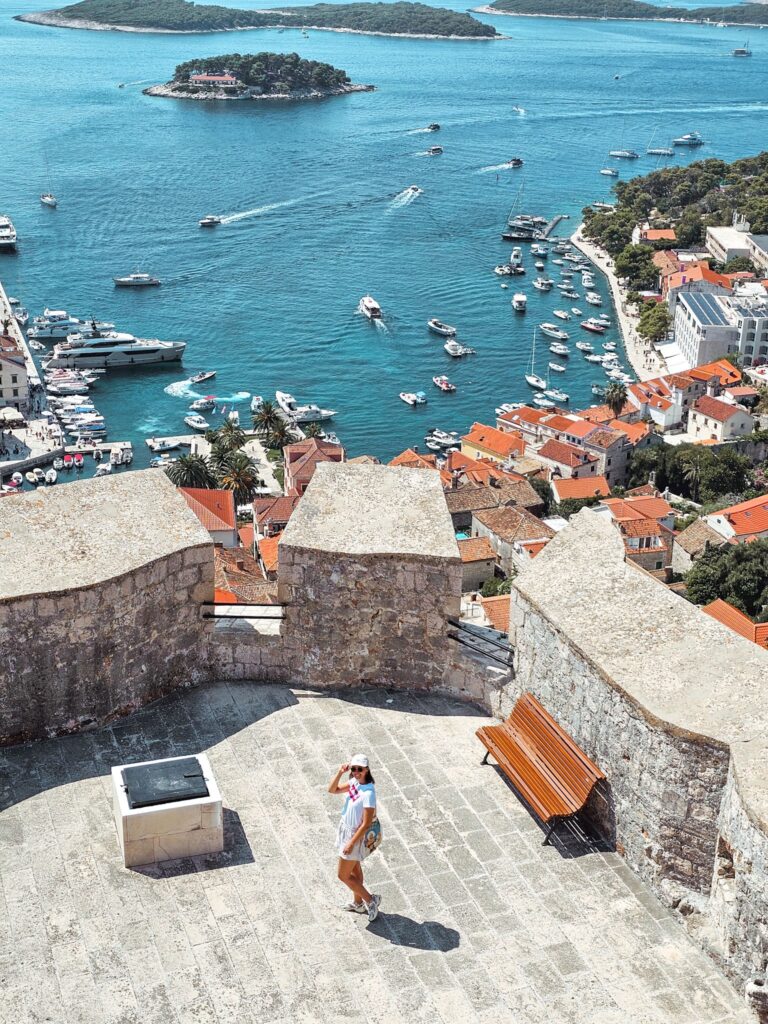
Fort Napoleon
Fort Napoleon was built in the 19th century during the French occupation of the Adriatic coast. It is situated on a 230 m (754 ft) high hill, which means that the panoramic views are guaranteed.
Sadly, you can’t visit the fortress itself as it’s used as an observatory and therefore not open to the public. You can still go there for the views, which are amazing and I definitely recommend going there!
You can go with a car or take a moderate hiking trail. If you’re visiting in summer, the best is to either go by car or do an early morning hike because it gets really hot during the day, so hiking under the strong sun is not really recommended.

Day 9: Hvar
On your 2nd day in Hvar you will explore the most beautiful towns and villages: Stari Grad and Vrboska.
Stari Grad
I visited Stari Grad in primary school during a summer camp and remembered little. But, as soon as we stepped in I regretted not booking my accommodation in Stari Grad.
The old town is so beautiful; every corner is photogenic and overall it feels more authentic compared to Hvar Town.
Here are some of my favourite sites you should check in Stari Grad:
- Fortress of Petar Hektorovic
- Church of St Stephen
- Promenade
Vrboska
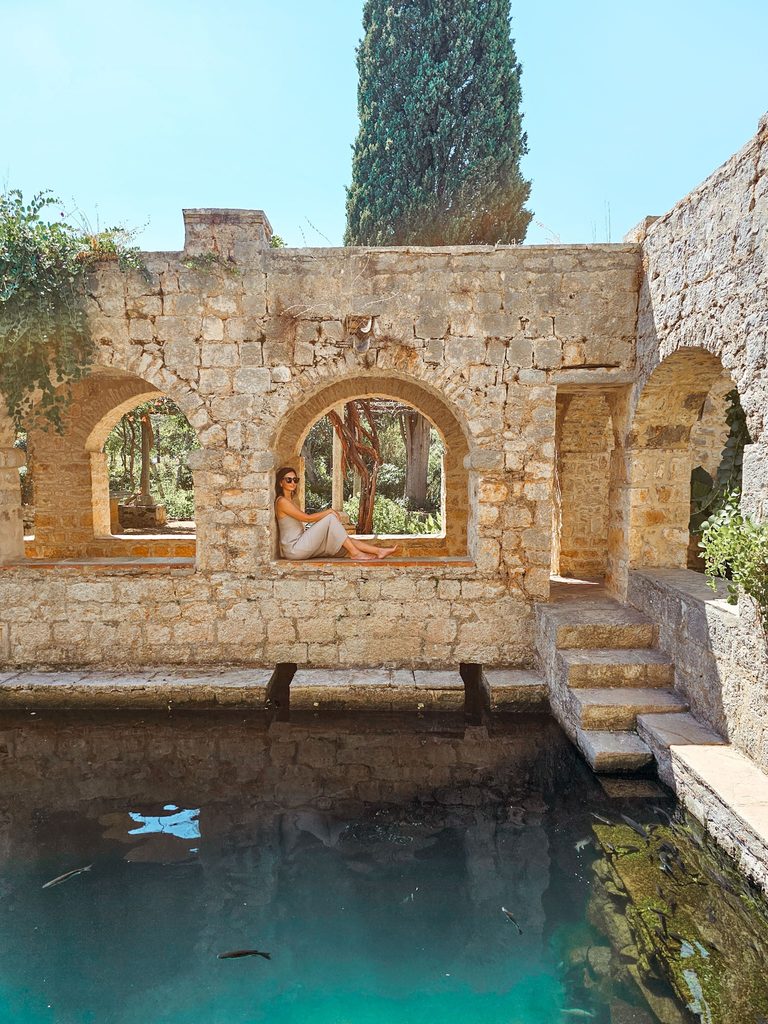
Vrboska is a village near Stari Grad that is often nicknamed as the Little Venice due to the canals that go through it.
It’s a pretty small place, but very picturesque.

Milna Beach
After all this sightseeing I recommend going to the Milna Beach near Vrboska.
The bay is really nice, the sea is calm with emerald green and blue colours. It’s one of the rare sandy beaches you will find in Croatia, so if you’re looking for one, then definitely go there.
It’s a rather small beach, but it’s also not popular at all + you need a car to go there, so it won’t be a problem to find a space to put your towels.
Just bear in mind that it’s a wild beach, meaning there are no bars/restaurants nor amenities on the beach.

Day 10: Hvar
On your last day in Hvar I recommend a full beach day.
Dubovica Beach
I’ve been to several beaches in Hvar and while all of them were nice, the most beautiful beach to me was Dubovica.
It’s not a hidden gem anymore, but it’s also not overpopulated, and that’s mainly because it’s not accessible to get to at all!
It’s a bay beach, but to reach it, you need to leave your car on top of the road and then walk down for about 20 minutes. The way down is not bad, but going up nearly killed me, and I work out!
But, once there, you’d see it’s totally worth it. The sea is calm, turquoise blue and very clean. There’s one beach bar and one konoba to eat something and that’s it. There are no sun loungers to rent, so bring your own beach towels.
Just bear in mind that the beach is of bigger pebbles, so it may be hard going into the water. I don’t like water shoes, so I never get them, but it is actually advisable to wear them because your feet will hurt.

📖 Read my Basic Croatian Phrases Every Traveller Should Know blog post.
Google Map for 10 Days Croatia Itinerary
FAQs for 10 Days in Croatia Itinerary
Below I will answer some of the most common FAQs for this particular itinerary.
How to Get to Croatia
For this 10 days in Croatia itinerary I recommend flying into Dubrovnik and departing from Split airport.
How to Get around Croatia
Unfortunately, Croatia is not a public transportation-friendly country. The best option is to rent a car.
If renting a car is not possible for you, then you can take the intercity bus from Dubrovnik to Split.
Uber works fine in both Dubrovnik and Split if you need to use it.
For day trips, if you don’t have a car, then just go on guided tours.
To reach Hvar from Split, you need to get the tickets for ferry or catamaran.
When to Visit Croatia
The best time to visit Croatia is in the summer months, from June to September. The weather is at its best, you can expect long, hot and sunny days, so it’s perfect for swimming and sightseeing.
Yes, it is when you can expect the most crowds too, but the Croatian seaside is popular in summer for a reason. If you’re really not that into swimming and beach activities, then May is a great month too.
I would personally avoid winter months from January to March because despite its location on the Mediterranean, Croatia can get cold in winter, especially when the strong wind called Bura arrives.
📖 Read my When is The Best Time to Visit Croatia: A Local’s Guide blog post.
How Many Days in Croatia
To really explore Croatia properly, you need at least 2 full weeks. I’d say 10 days is the optimal amount of time, but even with 7 days you can explore quite a lot while also not rushing from one place to the next.
📖 Read next:
- 7 Best Places to Visit in Croatia for First Timers
- Dreaming of Croatia: 15 Best Places to Visit
- 7 Days in Croatia: A Realistic Itinerary
- 15 Traditional Croatian Foods to Try on Your Trip
- 20 Insider Things to Know before Travelling to Croatia
- When is The Best Time to Visit Croatia: A Local’s Guide
- 10 Beautiful Boutique Hotels in Croatia Worth Booking
- A Brief History of Croatia: From Prehistory to Present Day
- 7 Best Food Tours in Split to Experience Croatian Food
- Basic Croatian Phrases Every Traveller Should Know
Croatia Travel Plan
If you’re looking for a custom Croatia travel plan, find out more about my personalised itinerary service.
Like this post? Pin it!📍