Croatian Flag Meaning: History, Symbols & Legend Explained

The Croatian flag is one of the most recognisable in the world, mainly for its famous red and white checkerboard. Even if you don’t know much about Croatia, you’ve probably seen the famous red and white checkerboard on football shirts. But there’s much more to the story behind Croatia’s flag besides its popular colours. In this blog post we will discuss the meaning behind Croatia’s flag.
Every colour, every square and symbol tells part of Croatia’s history. Some have clear historical origins, while others are surrounded by legends that have been passed down for centuries.
As a born and raised Croatian with a Master’s degree in History, I will make sure that once you read this blog post you know a little bit of the history and symbolism behind our flag. You will also become familiar with the legend about our King Stjepan Drzislav and the origin of checkerboard.

Croatia Travel Plan
If you’re looking for a custom Croatia travel plan, find out more about my personalised itinerary service.
Heads up! Some links in this blog are affiliates. If you click and buy, I may earn a small commission at no extra cost to you. Rest assured, I only recommend stuff I’ve tested or trust. You can read more about our affiliate disclaimer here.
Travel Resources for Croatia:
⭐️ Join my Croatia Travel Tips FB Group to ask questions, get advice and engage with our community.
What Does the Croatian Flag Look Like?
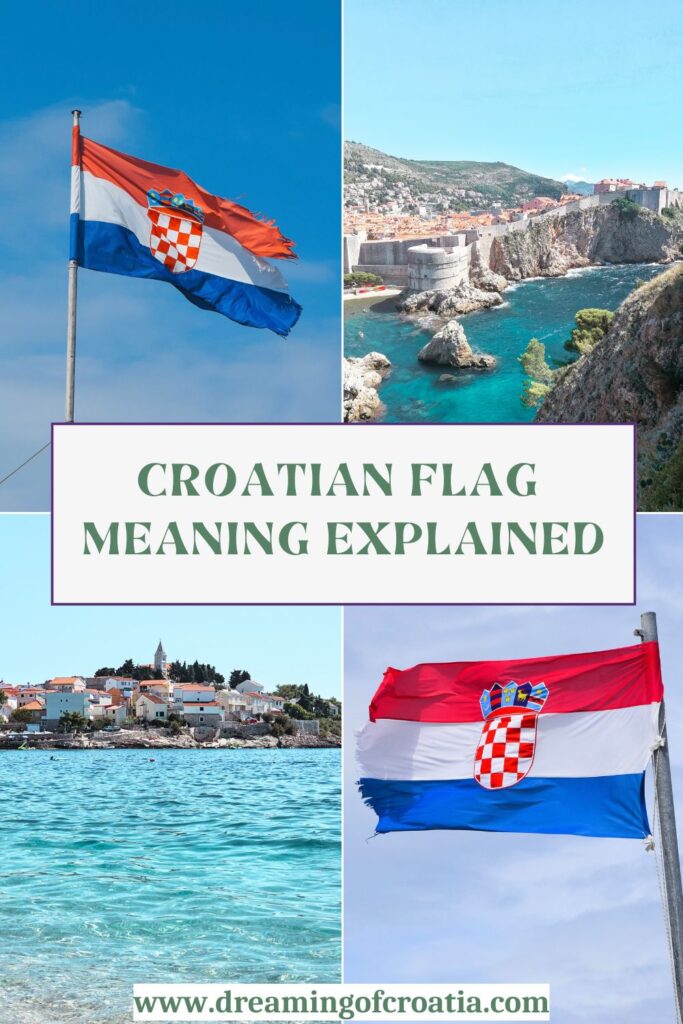
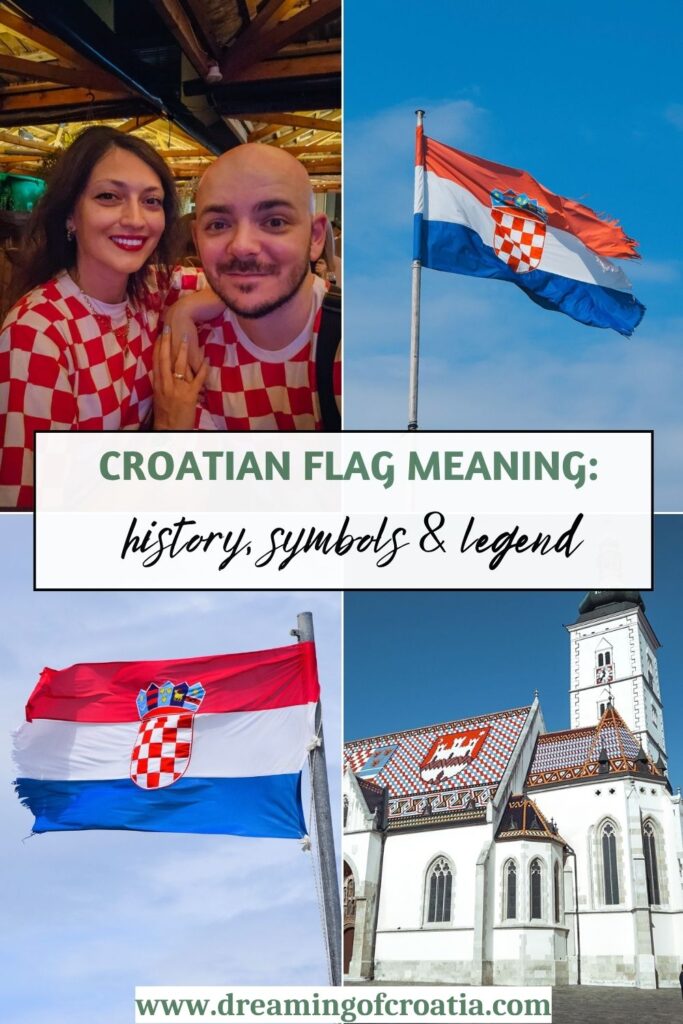
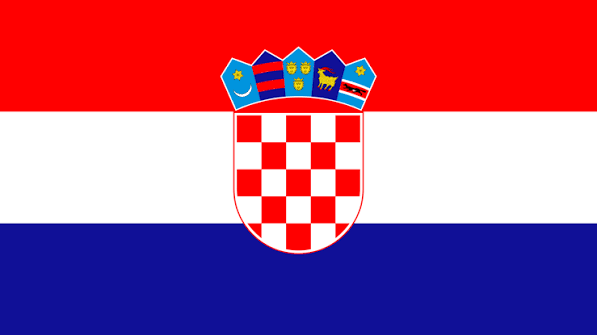
The Croatian flag consists of three horizontal stripes: red, white and blue (in that exact order). In the middle of it is Croatia’s coat of arms, and this is what makes our flag instantly recognisable.
The main shield is a famous checkerboard which consists of 13 red and 12 white fields. In Croatia we call this part sahovnica (pronounced as shah-hov-NEET-sah).
On top of the main shield is a crown with five smaller shields, but I’ll explain later what they mean.
What Do the Colours of the Croatian Flag Mean?
Okay, let’s now discuss what each of the colours on the Croatian flag mean.
Like many Slavic countries, Croatia uses the Pan-Slavic colours of red, white and blue (Croatian order of colours, in other countries they can be put differently). These colours became popular during the national revival movements of the 1800s and symbolised the shared heritage of Slavic peoples.
Red symbolises the spilt blood of our fellow Croatians who fought for freedom and independence over the centuries.
White symbolises peace, unity and purity of national ideals, and also represents our crops.
Blue symbolises our beautiful Adriatic Sea, which defined us as the first Slavic marine people and culture.
What Does the Croatian Coat of Arms Mean?
As mentioned above, the Croatian coat of arms is divided into two parts: main shield and crown, so I will explain both separately.
The Red and White Checkerboard (Sahovnica)
The red and white checkerboard, also known as sahovnica, consists of 13 red and 12 white shields.
Historically, the chequers have represented the Croatian people, signifying our resilience, unity and sovereignty.
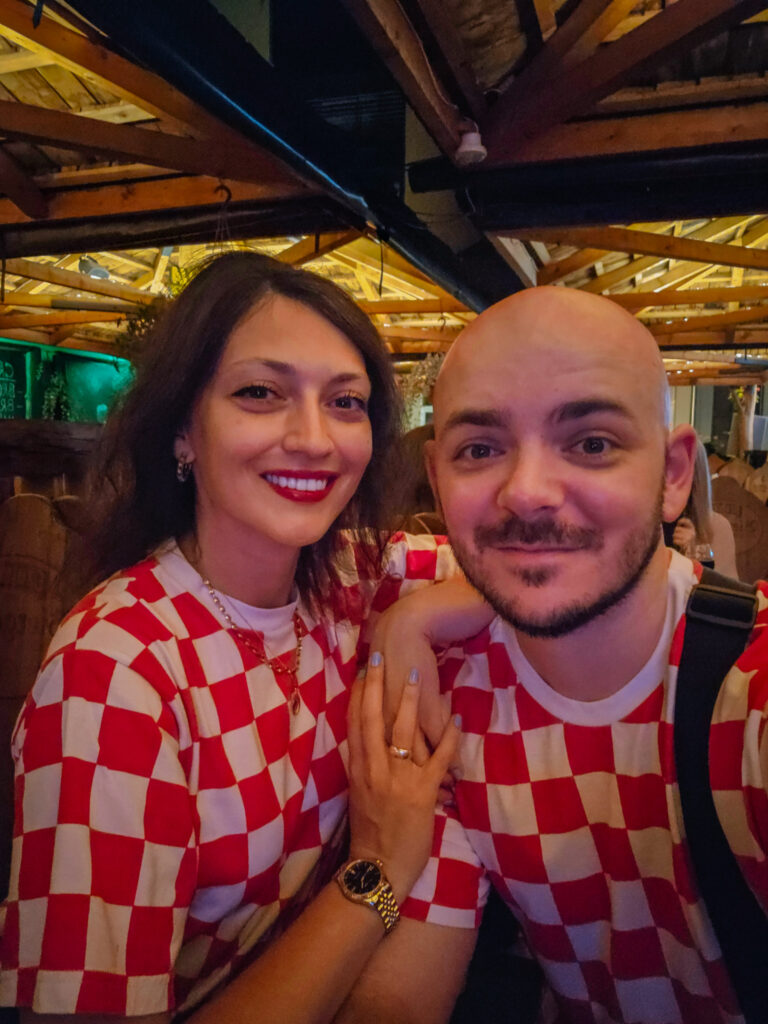
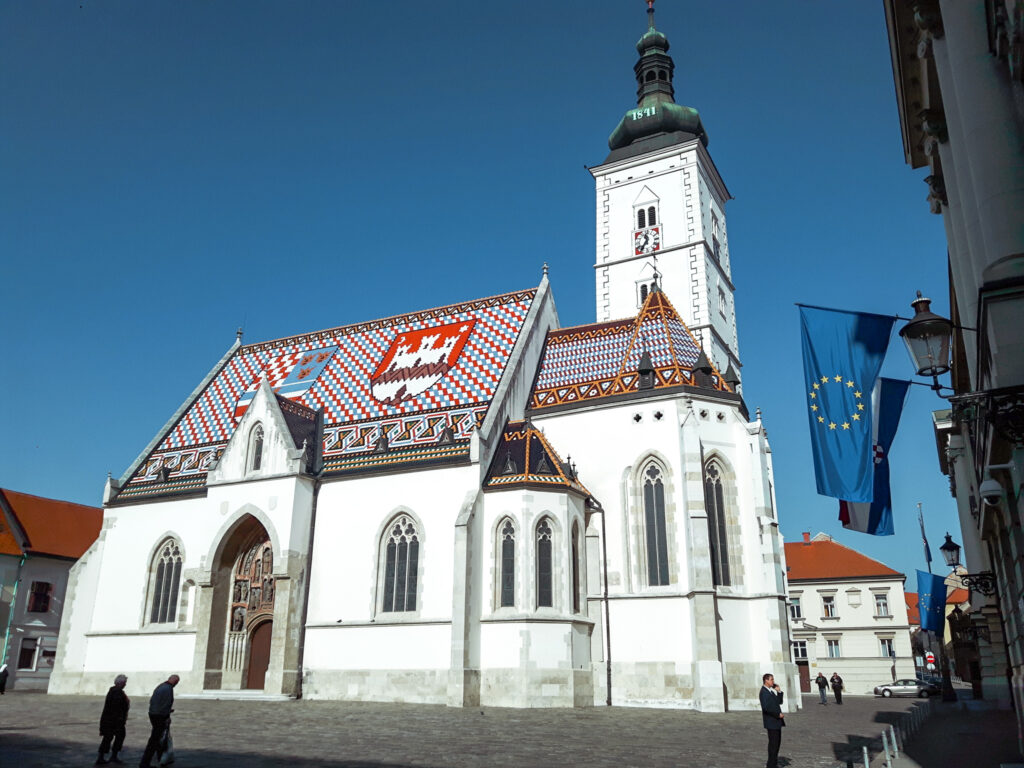
Which is why checkerboard is the national symbol of Croatia, so you’ll see it everywhere; from souvenirs to jerseys and even buildings.
📖 Read my 12 Most Popular Croatian Traditions to Know About blog post.
The Crown Above the Shield
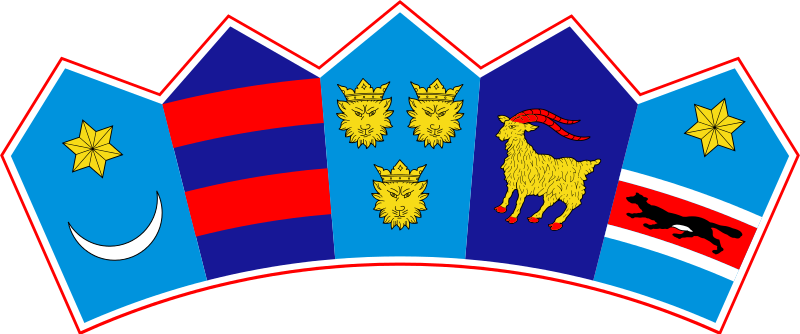
Above the checkerboard are five smaller shields that represent Croatia’s historic regions and heritage.
The first shield is considered the oldest known symbol associated with Croatia. It features a blue background with a golden six-pointed star called Danica (DAN-ih-tsah) above a silver crescent moon.
The second shield represents the historic Republic of Dubrovnik. It features two red horizontal stripes on a blue background and honours one of Europe’s most successful maritime republics.
The third shield represents Dalmatia. It displays three crowned golden lion heads on a blue background, a symbol that has been associated with the Dalmatia region for centuries.
The fourth shield represents Istria. It features a golden goat with red horns and hooves on a blue background, reflecting one of Croatia’s most distinctive regions.
The final shield represents Slavonia, where I live. It shows a marten running between two white lines that symbolise the Drava and Sava rivers, with a six-pointed star above it.
Together, these five shields celebrate Croatia’s rich regional history and remind us that our country was shaped by many different kingdoms, regions and cultures throughout centuries.
The Legend of King Stjepan Drzislav and the Chess Match
Besides historical facts, we also have a very popular legend on why there’s a checkerboard on the Croatian flag.
According to the story, King Stjepan Drzislav was captured by the Venetians in the 10th century.
Instead of keeping him imprisoned, the Venetian Doge offered him a challenge. If Stjepan Drzislav could beat him in a game of chess, he would earn his freedom.
Not only did Stjepan Drzislav win once, but according to the legend, he won three games in a row.
After regaining his freedom, the checkerboard from the chessboard supposedly became his personal coat of arms, eventually evolving into Croatia’s national symbol.
However, as much as I love this legend, it is important to emphasise that there’s no historical evidence that this actually happened. Additionally, the first evidence of the chessboard was found at the end of the 15th century.
A Brief History of the Croatian Flag
The history of the Croatian flag goes hand in hand with Croatia’s own history and struggle for independence. While the current version was officially adopted in 1990, many of its symbols are hundreds of years older.
The most recognisable feature is as we’ve discussed the red and white checkerboard. It has been associated with Croatian rulers since the 10th century and has remained a symbol of Croatian identity ever since.
The red, white and blue stripes were introduced much later. They were inspired by the Pan-Slavic movement in the 19th century, when many Slavic nations adopted these colours as a symbol of their shared heritage.
Over the centuries Croatia was part of different states, including the Habsburg Monarchy, the Kingdom of Yugoslavia and later socialist Yugoslavia. During that time, the flag changed several times, but the checkerboard remained an important national symbol.
When Croatia moved towards independence, a new flag was adopted on 21 December 1990. After Croatia declared independence in 1991, it officially became the country’s national flag and has remained unchanged ever since.
📖 Read my A Brief History of Croatia: From Prehistory to Present Day blog post.
Where to Stay in Croatia
Here are some bucket list hotels to check during your stay in Croatia:
- Hotel Excelsior Dubrovnik – beachfront, with the views of the Old Town
- Grand Park Hotel Rovinj by Maistra Collection – most beautiful hotel in Istria region
- Plitvice Holiday Resort – luxury glamping resort near Plitvice Lakes
- Esplanade Zagreb Hotel – historical art-nouveau hotel in Zagreb
- Vila Vinkomir Kutjevo – villa in the Kutjevo vineyard and winery
Croatia Travel Plan
If you’re looking for a custom Croatia travel plan, find out more about my personalised itinerary service.
Like this post? Pin it!📍